Take my hand.Today, we’re stepping across centuries — to a place where stone walls still remember the clash of swords and the murmur of the Danube below. We’re going to … Continue reading Golubac Fortress – Whispers of the Danube
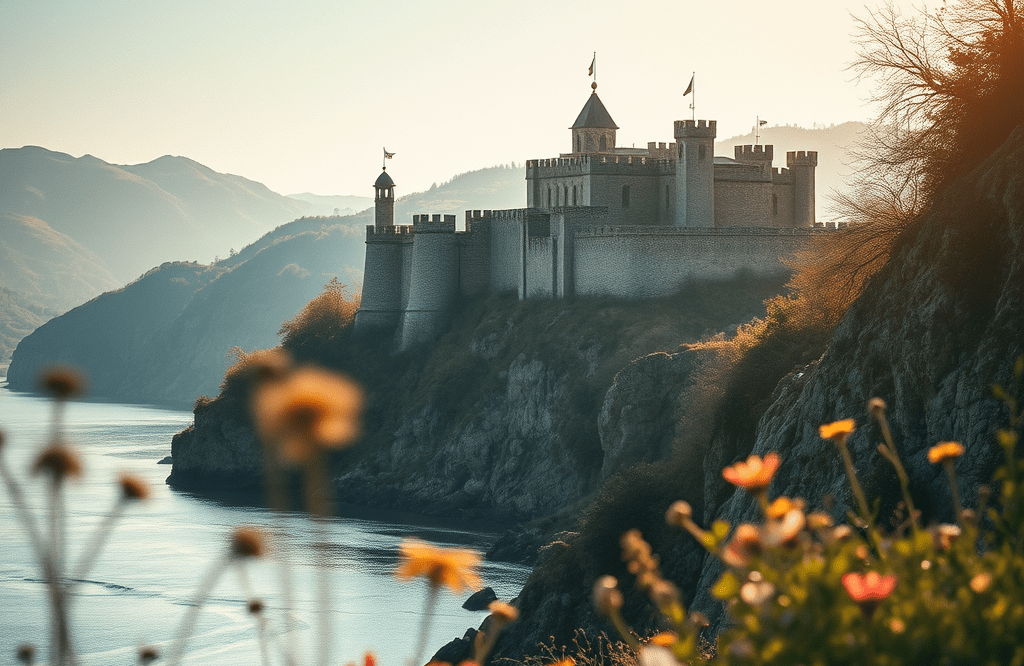
Take my hand.Today, we’re stepping across centuries — to a place where stone walls still remember the clash of swords and the murmur of the Danube below. We’re going to … Continue reading Golubac Fortress – Whispers of the Danube
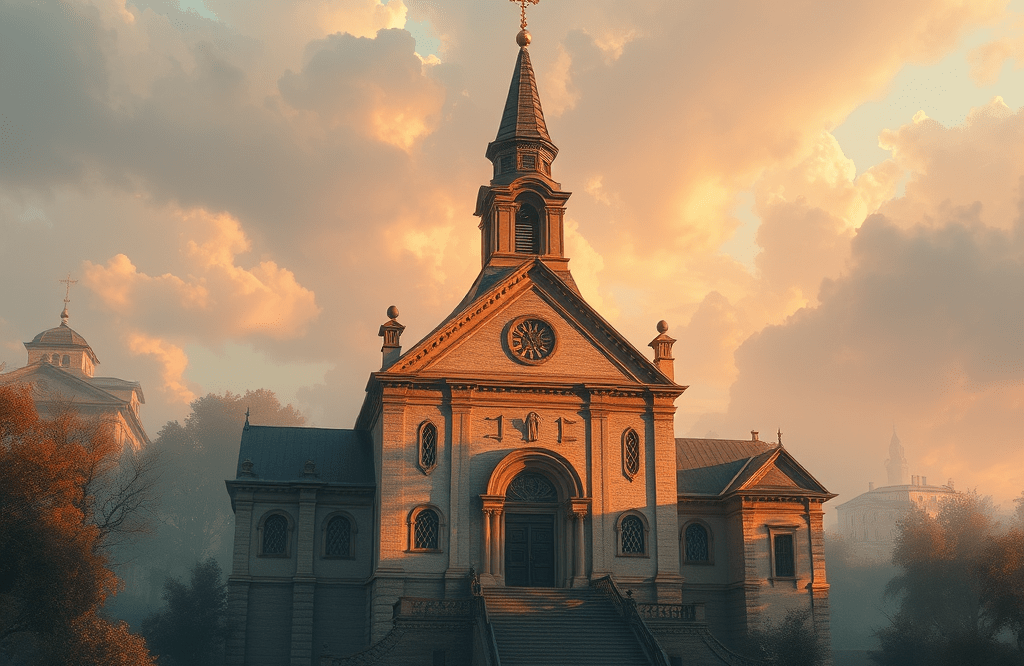
Today, I would like to take you on a new journey. We will visit a church rich in history. Grab my hand, and let’s enjoy the experience together. The church … Continue reading Schitul Darvari – A Journey Through Time
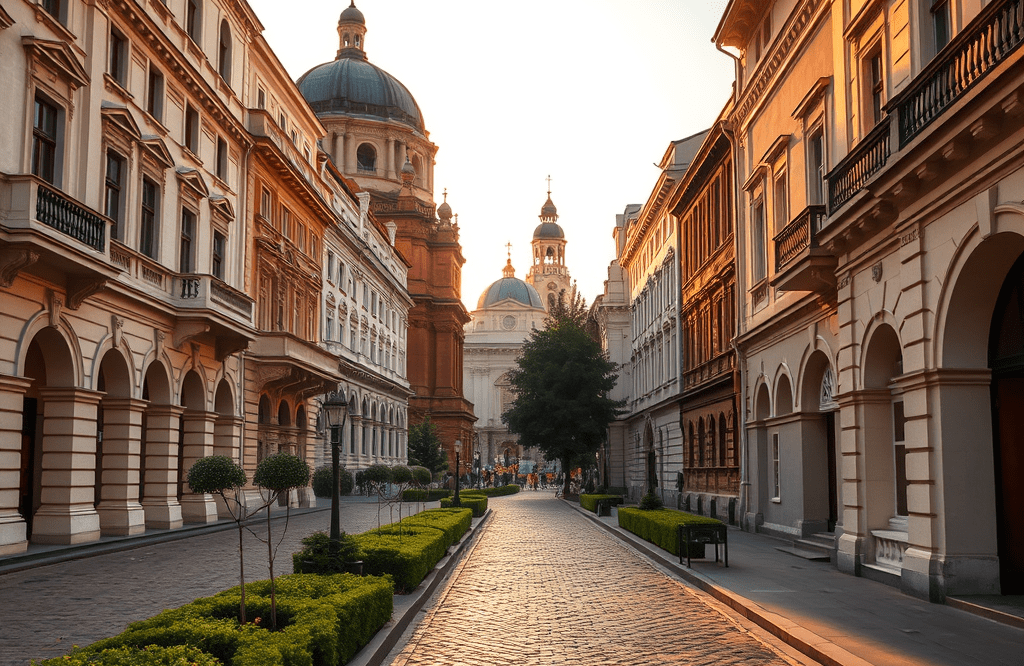
Today, I will take you on a new trip. We will walk along the most famous street in Bucharest, Calea Victoriei. Long ago, this street had a different name, so … Continue reading Calea Victoriei
Today, I invite you to join me on a fascinating journey through time, as we take a walk along Calea Plevnei—one of Bucharest’s most storied streets. Grab my hand, and let’s step back in history together.
In its early days, this street wasn’t as we know it today. It was once called the *”Earth Bridge”* because it was simply a path made of dirt mixed with gravel, rubble, and ash—without the wooden beams typically used to reinforce roads. The street began at the meadows near the Dâmbovița River, stretching from the slums of Trumpets (behind the CEC Palace), crossing the Dâmbovița at the Ford of the Sacks, and passing by the impoverished districts of Izvorani and Gorgani, eventually leading out of the city.
At the time, the Dâmbovița River often flooded the slums of Gorgani and Izvor, so local authorities decided to build an earth dam to protect these areas. This dam is how the street got its name. For the young men living here around 1830, keeping the dam in good condition was a duty, and while it was a difficult task, it came with an unexpected benefit: they were exempt from military service.
Calea Plevnei, like many old streets, holds a rich tapestry of events. Let’s pause at some key moments in its history.
The Military Barracks of Saint George
In 1844, during the reign of Gheorghe Bibescu, a military barracks was built here for the cavalry. The first stone was laid with great ceremony, alongside a lead container holding a building plan and a commemorative coin minted for the occasion. Unfortunately, this structure was short-lived—it was destroyed by fire in 1861. But the site would not remain empty for long. A larger building would soon rise in its place, one with 475 rooms. This new barracks, named *Malmaison* in honor of French Emperor Napoleon III’s favorite castle, became a key feature of the street. However, the name didn’t quite stick with the locals, who affectionately transformed it into *Marmizon*. This place would go on to play an even larger role in history, later housing a prison where many notable figures, including Corneliu Coposu, Constantin Noica, Nicolae Steinhardt, and Paul Goma, were incarcerated during the Communist era. The site eventually became part of the Chemistry Institute.
The Manutanta Bakery and the Silent Informant
Not far from Marmizon, a military bakery called *Manutanța Centrala a Armatei* was built in 1891. Local lore tells of a man known as “The Mute from Manutanța”—a mysterious figure who seemed to know everything about politics and the world around him. His name became synonymous with gossip and secrets. People often joked, “Where did you hear that? From the Mute of Manutanta!”
The Church of Saint George: From Farmazon to Freemasonry
Nearby stood the Church of Saint George, which locals affectionately called the *Church of Farmazon*—a term that roughly translates to “wizard.” The name wasn’t about magic, but rather a nod to Procopie Canusis, a local landowner who was associated with the secret society of *Eteria*—a group that sought to liberate Greece from Ottoman rule, inspired by Freemasonic ideals. Canusis, a proud member of the society, wanted his tombstone to bear the words *”Franc-Macon”*. Over time, this became *”Farmazon”*, and the name stuck. Later, a street would take its name from this association—first called “Farmazon,” then “Francmason” during the communist period, and today it is known as Mircea Vulcanescu street.
The Military Hospital and the Brewery
As time passed, the area continued to develop. Between 1857 and 1858, a hospital for soldiers was established here, which later became the Military Central Hospital we know today, founded in 1885.
At the end of Calea Plevnei, in 1869, the *Luther Brewery* was built, producing beer that became popular in the grandest restaurants and even at the royal court. The brewery was an important part of life in this area and added to its vibrant character.
A Name Change: From Earth Bridge to Calea Plevnei
In 1878, in honor of Romania’s victory in the War of Independence, the street’s name was officially changed to *Calea Plevnei*, after the town of Plevna in Bulgaria, where a significant battle was fought. It was a place where the Turkish forces were defeated, marking a major turning point in the war.
And now, here we are, walking along a street that has witnessed centuries of change—from the Earth Bridge to the bustling avenue we see today.
I hope you’ve enjoyed this historical walk with me, tracing the steps of the past.
Today, I invite you on a journey through time along a street in Bucharest. So grab my hand, and let’s take a walk together.
Our path leads us to Calea Moșilor, which translates to “the way of old men.” Let’s explore how this street earned its name and what it was called before.
Originally, this street led from the royal court to an outdoor market located near a bridge. This market was held twice a week, on Tuesdays and Fridays. Additionally, there was a significant annual market at the end of May called the Old Men’s Market, which was tied to a holiday that commemorates the souls of the deceased. On this day, known as the Saturday of the Dead, people would offer new clay pots filled with food to appease the souls of their loved ones. This holiday is celebrated on the Saturday before Pentecost. At this market, items related to the commemoration of the dead were sold.
Some believe the name “Old Men” refers to the time the market was first established during the reign of Matei Basarab, who ruled from 1632 to 1654. This market was originally created to honor his soldiers who died in the Battle of Fundeni in 1632, where he defeated Radu Iliaș, a rival claimant to the throne supported by Moldovans. Historical documents confirm the existence of the market from the early 17th century. Over time, the market relocated from its original site to the center of Bucharest, eventually moving to the Batiștei area as the city expanded.
By 1786, during the rule of Nicolae Mavrocordat, the market found its home in what is now the Obor Market. This market became the most well-known in the region, with similar but smaller markets appearing in other parts of the country. It bustled with locals from Bucharest and its surroundings, where people not only shopped but also socialized, enjoyed traditional Călușari dances, and participated in various festivities. Vendors offered gingerbread, whistles, puppets, and even curiosities like bearded women and shooting galleries.
However, this market wasn’t just a place of celebration; it also served as a site for executions. Condemned individuals were transported in an ox cart, often with a notice of their verdict displayed, as they were taken to their execution. Typically, those facing execution included bandits, forgers, traitors, and outlaws. Along the way, bystanders would offer them wine to ease their fear, often accompanied by their mothers or wives. Many convicted individuals would be unaware of their fate until it was too late.
Punishments for lesser crimes also took place at this market. Merchants caught cheating customers would face public humiliation, tied half-naked with a soldier beating them while shouting, “Who will do like him will suffer like him.” Women accused of adultery were similarly punished, paraded around in long shirts while sitting backward on donkeys.
Executed individuals would remain on display for some time after their deaths, serving as a grim warning to others. This practice of public display ended during the reign of Grigore Ghica (1822-1828).
Calea Moșilor, like other city bridges, initially had wooden pathways, which were repaired in 1792. Nearly a century later, in 1875, these paths were paved with river stones. By the late 19th century, Calea Moșilor had become Bucharest’s second-largest commercial route, resembling an oriental bazaar, with small, one- or two-story houses, pubs, summer gardens, cafés, and various shops lining the street.
Eventually, trams were introduced, bringing people to the market. It became customary for students to ride on the roofs of trams, tossing rice, corn, beans, and sometimes flowers to those standing by the windows. This playful interaction became a tradition, especially when the students spotted attractive women. With the decline of the trams, this form of entertainment faded.
By the end of the 19th century, the authorities purchased the market land, converting part of it into an exhibition space for industrial and agricultural products. As Obor Hall and the surrounding park were built, the market size diminished. In the 1980s, sections of Calea Moșilor and Carol I Boulevard were demolished to make way for new buildings. The Bucur-Obor shopping center, constructed in 1976, still stands today.
Now, as we stroll along Calea Moșilor, we can enjoy its shops and the nearby Bucur-Obor market. I hope you’ve enjoyed this journey with me!
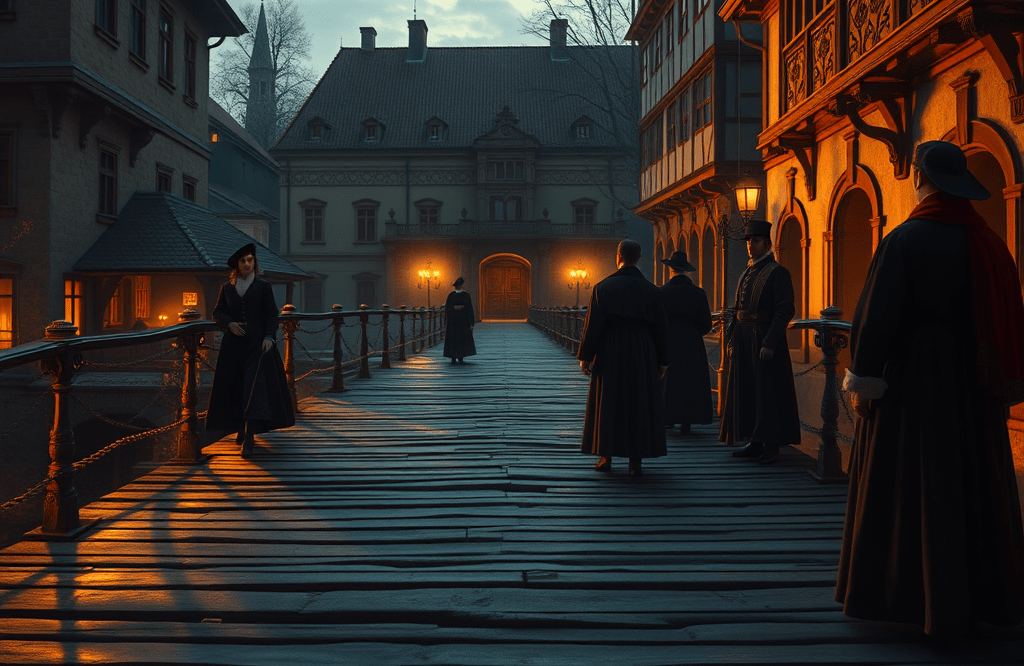
Today, we will journey back to the 17th century in the old Bucharest, exploring a city that looks entirely different and is much smaller than what we know today. Picture … Continue reading The Black Chancellery
ARRETE!
C’EST ICI l’EMPIRE DE LA MORT
Today I shall take you to visit a place full of history and souls. So grab my hand and let’s go. The place where we shall go is an underground tunnel situated in Paris, I think you already guessed the destination. We shall first consider if we enter as here is the empire of the dead ones.
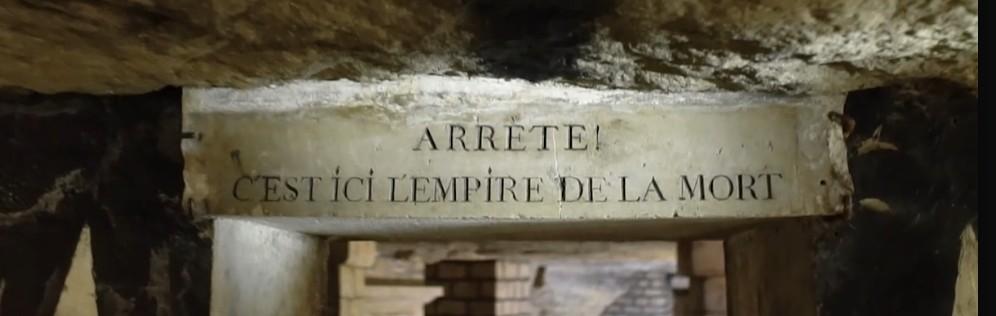
After we crossed into their empire we shall see all of their skulls, their bones all lined on the walls. Imagine how many lives, how many stories are lurking down here. Some are old maybe they saw the French Revolution as the place was redesigned like this around the 18th century. Be careful we are deep underground at 20 m and the road can be a real labyrinth. Their history starts back to the late 18th century. Originally former quarries, these underground tunnels evolved into a unique burial site as a response to overcrowded cemeteries in Paris. In the late 1700s, bones from various graveyards were relocated to the catacombs, creating an ossuary with a display of human remains arranged in decorative patterns.
As you can imagine, during that time, tunels were used for other things like secret meetings. Over the years, secret societies and clandestine gatherings have utilized the catacombs for meetings, rituals or parties. The underground world has become a canvas for cryptic symbols, adding an air of enigma to its already hounting atmosphere.
Look! There! It is a heart made of skulls. I wonder if they would ever imagine, that their remains can decorate in such a way, a wall ? Probably not!
But, hey, it is something to be part of the bigest underground ossuary from the whole world.

You may wonder why they created such a place and why they are not in a normal graveyard as they should. History says that in the late 18 century there was a major health issue, related to the cemeteries. The city authorities decided to transfer the dead ones to un underground site, when the decision had been made, tunels were not in the city. First bones came from the largest cemetery in Paris, the Saint-Innocents cemetery. Transfers were made, from 1785 to 1787. Since 1809, Catacombs were open to the public. The name ” Catacombs” was given, as a reference to the Roman catacombs. Unfortunately, we can visit just 1500m of a total area of 11000m2.
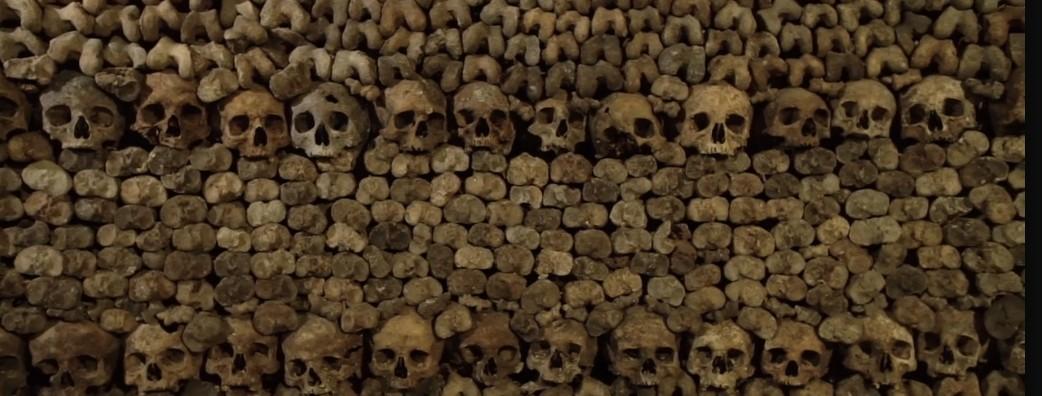
Even so we have enough to enjoy beside the bones. We can see the Samaritan Fountain or the Sepulchral Lamp and imagine how many stories are hidding here. How many secret gatherings happen here. How many plans were made down here in time of danger. I hope you enjoyed!
Here you can visit it online: https://www.catacombes.paris.fr/en
 cursedtraveler