Category: Fără categorie

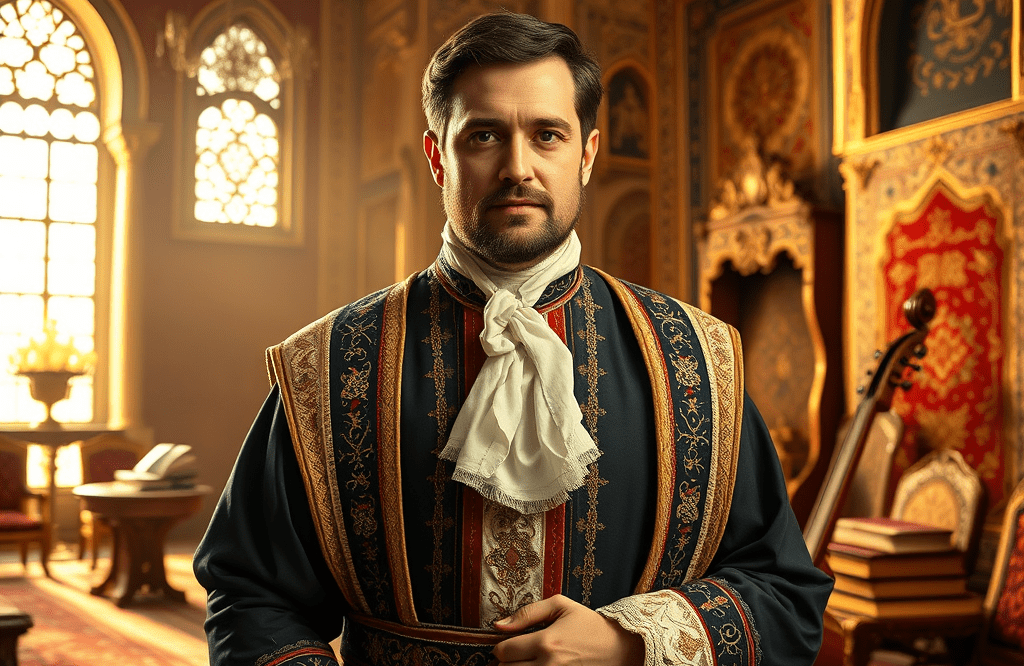
Ioniță Tunsu: The Outlaw of Bucharest

Today, I invite you on a captivating journey back in time. Grab my hand as we step into Bucharest of 1830, where we’ll follow the trail of a legendary outlaw—one who dared to rob from the rich to give to the poor. His name? Ioniță Tunsu, an alias meaning “the Haircut.”

You might wonder about this curious nickname. Tunsu once served as a verger at the Church of the Holy Voivodes, and his melodious voice made him a prime candidate for the priesthood. The Bishop of Argeș had plans to elevate him to a priestly role, recognizing his kindness and literacy. At that time, priests wore long hair, but when Tunsu chose to abandon the church, he cut it short, symbolizing his break from the past.

Let’s delve into the life of this intriguing character. Born in 1800 in Olt, Tunsu was a robust young man—well-educated and gifted with a voice suited for the pulpit. In a society where such qualities made him an ideal priest, he instead sought a different path as an outlaw. Gathering a band of like-minded men, he retreated to the forests of Olt, where he united his crew with another. Tunsu was known for targeting only the wealthy; he never resorted to violence, treating his victims with surprising generosity, always aiding those in need.

His exploits soon made him a wanted man, much to the dismay of the affluent elite. During this tumultuous time, Wallachia was under Russian protection, with General Pavel Kisseleff overseeing both Wallachia and Moldova. Tunsu, with a sense of audacity, penned a letter to Kisseleff, requesting mercy if he were ever captured. He expressed his respect for Kisseleff, highlighting that he could have easily shot him but chose not to, for the love of his country.

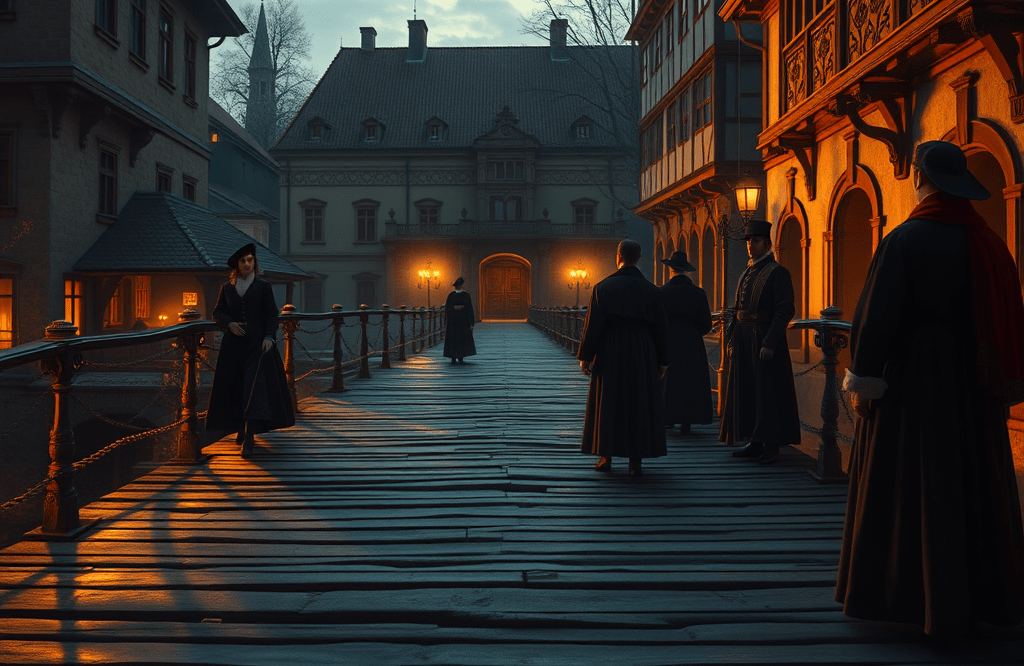
Kisseleff, intrigued yet determined, ordered Tunsu’s capture—but with instructions not to kill him. Tunsu often slipped back into Bucharest, hiding in carriages to evade capture, but ultimately, betrayal awaited him. His godson, a police captain, revealed Tunsu’s plans to the authorities, offering details about his arrival in a carriage pulled by two horses—one white, one dark. A trap was set at the end of Mogoșoaia Bridge, anticipating a robbery of another police captain.

When Tunsu and his men arrived, a fierce confrontation erupted near the Dâmbovița River. Some of Tunsu’s men fell, while others managed to escape. Injured and desperate, Tunsu and a few companions leaped into the river to evade capture. Tragically, Tunsu suffered a severe abdominal wound. Despite Kisseleff’s men rushing to aid him, he succumbed to his injuries after a few agonizing hours.

In a hauntingly beautiful twist, Tunsu’s body was displayed on Calea Mogoșoaiei, not as a spectacle of shame, but as a tribute. Mourners brought flowers, silver coins, and tears, honoring the man who had fought for the underprivileged. Those who betrayed him were rewarded handsomely.

Though he met a tragic end at just 32 years old, Tunsu became a symbol of heroism for many. His legacy endured, inspiring theatrical adaptations—most notably in 1858, when the renowned Matei Millo, the father of Romanian theatre, brought his story to life on stage.

I hope you enjoyed this journey through time and that you’ll join me again soon for another captivating adventure.

Shadows of Legacy: The Tale of Constantin Brancoveanu

Embark on a thrilling journey with me as we step back in time to the era of Constantin Brancoveanu. Picture yourself amidst the grandeur and intrigue of this historical period, where we previously glimpsed the workings of the infamous Black Cancellerie. Despite his remarkable abilities, even the great Brancoveanu met a tragic fate. A similar destiny awaited his contemporary, Constantin Cantacuzino, who would also fall victim to the Ottoman forces just two years later.

Today, we will delve into the harrowing aftermath of Brancoveanu’s demise alongside his sons. After their execution, their bodies were displayed in a grim spectacle for all to witness. Under the cover of night, their remains were secretly transported the following day on a ship to Halki island, where they were buried. Six years later, they found their way back to Romanian Country to rest in an unmarked grave within a church built by Brancoveanu himself, kept nameless to shield it from Ottoman eyes. Only a solitary candle stands as a beacon to commemorate his legacy.

His grieving wife orchestrated this secret burial after enduring the pain of losing her husband and four sons. Today, he rests at the Saint Gheorghe Church, though for over two centuries, his grave lay forgotten. It wasn’t until 1914 that Virgil Draghiceanu stumbled upon this significant site.

Now, as we return to the present, we can pay homage to this great ruler whose legacy endures. Despite his tragic end, Brancoveanu governed for an extraordinary 25 years—a testament to his enduring impact on history. Come, let’s honor the memory of a man who shaped an era, even in death.

The fall of a great ruler!

Let’s embark on a captivating journey through history! Yesterday, we traveled back to the 17th century, and now we’re heading to a dramatic turning point in that era. It’s still the time of Constantin Brâncoveanu, but friendships once solid have begun to erode. His longtime ally, Constantin Cantacuzino, now harbors secrets and ambitions that threaten Brâncoveanu’s reign over Romania.

As the shadow of war looms between the Ottomans and Russians in 1711, the stakes become even higher. The Russian army, led by Tsar Peter the Great, advances into Moldova, where the local ruler allies himself with the Russians. Brâncoveanu finds himself torn between loyalties, attempting to maintain a neutral stance by establishing his camp at a strategic crossroads.

However, betrayal lurks closer to home. Toma Cantacuzino, Brâncoveanu’s own relative, takes matters into his own hands, siding with the Russian cavalry to seize the city of Brăila, defying Brâncoveanu’s orders. Though the Russians claim victory in this battle, the wider war is far from over. Eventually, a fragile peace is brokered between the Ottomans and Russians, but suspicion begins to swirl around Brâncoveanu. Accusations of treachery surface, fueled by palace intrigues orchestrated by those he once trusted, including Constantin Cantacuzino.

On April 14, 1711, the political clock strikes a dramatic hour. In Bucharest, Brâncoveanu receives a fateful visit from the Sultan’s envoy, Capug-Bașa Mustafa-aga. The moment is ominous; when the black shawl is draped over his shoulders, it symbolizes the end of his rule. Paralyzed by fear of Tatar incursions, none of the noblemen dare to rise against this imposition, and Brâncoveanu is taken to Constantinople, where Serban Cantacuzino is poised to seize the throne.

In Istanbul, Brâncoveanu faces a grim interrogation regarding his vast wealth, known for both its magnificence and his generosity. Although he complies with the demands, the ruthless Grand Vizier, Gin Ali Pasha, decrees a grim fate for him and his four sons. One by one, his trusted advisor is executed, followed by his sons, leaving Brâncoveanu to confront the tragic end of a once-mighty ruler.

I hope you enjoyed unravel this historical tale of power, betrayal, and the harsh realities of fate!

Empire of the dead -Paris catacombs

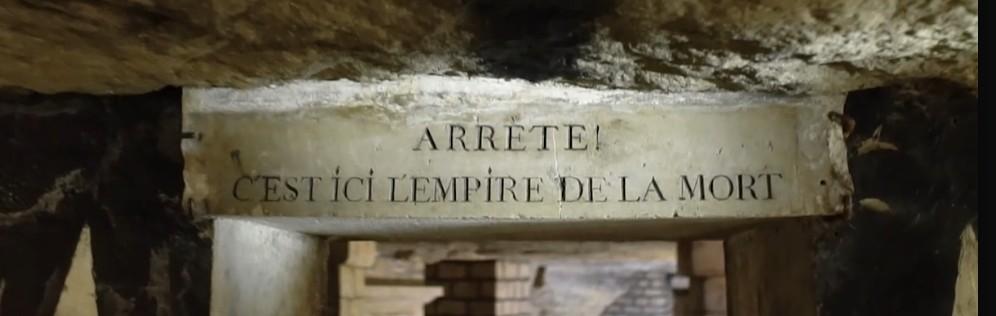
ARRETE!

C’EST ICI l’EMPIRE DE LA MORT

Today I shall take you to visit a place full of history and souls. So grab my hand and let’s go. The place where we shall go is an underground tunnel situated in Paris, I think you already guessed the destination. We shall first consider if we enter as here is the empire of the dead ones.

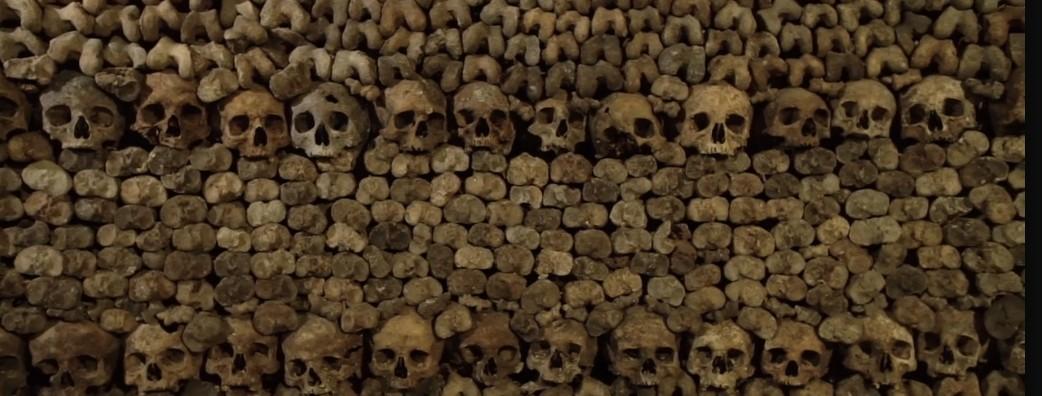
After we crossed into their empire we shall see all of their skulls, their bones all lined on the walls. Imagine how many lives, how many stories are lurking down here. Some are old maybe they saw the French Revolution as the place was redesigned like this around the 18th century. Be careful we are deep underground at 20 m and the road can be a real labyrinth. Their history starts back to the late 18th century. Originally former quarries, these underground tunnels evolved into a unique burial site as a response to overcrowded cemeteries in Paris. In the late 1700s, bones from various graveyards were relocated to the catacombs, creating an ossuary with a display of human remains arranged in decorative patterns.

As you can imagine, during that time, tunels were used for other things like secret meetings. Over the years, secret societies and clandestine gatherings have utilized the catacombs for meetings, rituals or parties. The underground world has become a canvas for cryptic symbols, adding an air of enigma to its already hounting atmosphere.

Look! There! It is a heart made of skulls. I wonder if they would ever imagine, that their remains can decorate in such a way, a wall ? Probably not!
But, hey, it is something to be part of the bigest underground ossuary from the whole world.

You may wonder why they created such a place and why they are not in a normal graveyard as they should. History says that in the late 18 century there was a major health issue, related to the cemeteries. The city authorities decided to transfer the dead ones to un underground site, when the decision had been made, tunels were not in the city. First bones came from the largest cemetery in Paris, the Saint-Innocents cemetery. Transfers were made, from 1785 to 1787. Since 1809, Catacombs were open to the public. The name ” Catacombs” was given, as a reference to the Roman catacombs. Unfortunately, we can visit just 1500m of a total area of 11000m2.

Even so we have enough to enjoy beside the bones. We can see the Samaritan Fountain or the Sepulchral Lamp and imagine how many stories are hidding here. How many secret gatherings happen here. How many plans were made down here in time of danger. I hope you enjoyed!

Here you can visit it online: https://www.catacombes.paris.fr/en