Ortu’ Popii — A Stroll Through Traditions
Today, I’ll take you on a little trip through traditions — a friendly walk through time.
So, come on, grab my hand, and let’s see where language, belief, and a few old coins will take us.
We’ll start with a Romanian expression that goes like this: „a dat ortul popii.”
You might stop for a second and ask, what on earth does that mean?
Well, literally, it means “he gave the priest the ort.”
Back in the day, “ort” was the name of a coin, and “popa” means “priest.” So, in its original sense, it meant to give a coin to the priest. But as time passed, the meaning changed — today, when someone says “a dat ortul popii,” they mean that person has passed away.
Let’s roll back in time to where it all began.
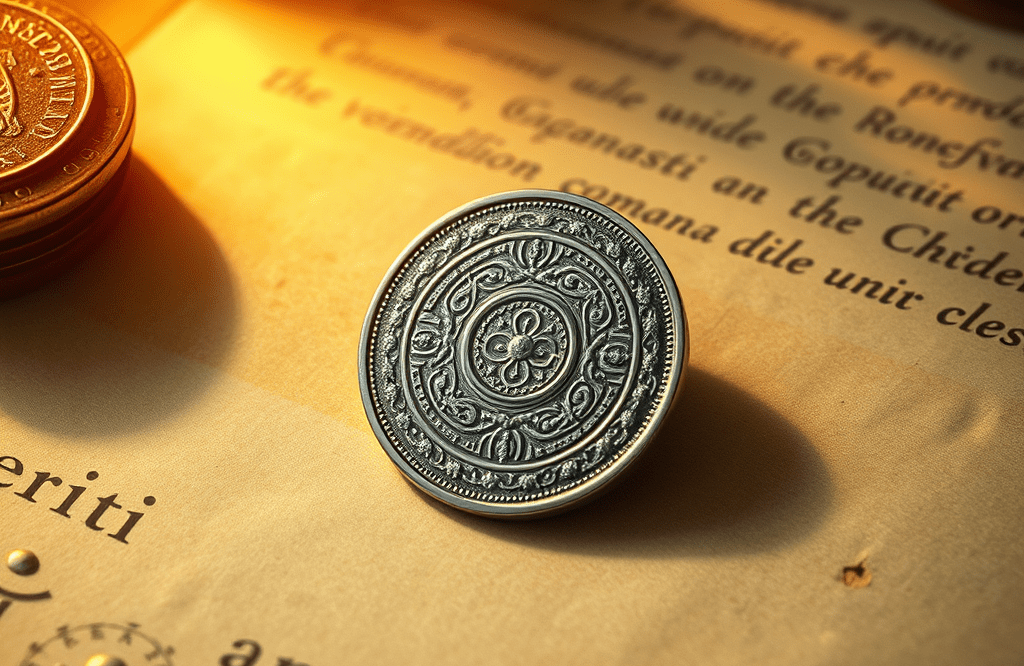
The ort was a small silver coin that circulated mainly in Țara Românească (Wallachia, part of today’s Romania). The word itself has German roots — from “Ort”, meaning “a quarter.” And that makes sense, because the ort was worth about a quarter of an old leu, the Romanian currency. It weighed roughly 7 grams and was quite common back then.
Originally, the coin was called “Ortstaler,” which, over time, got shortened to just “ort.”
This little silver piece traveled across Europe — through Turkish, German, and Polish hands — and of course, through the Romanian principalities during the 18th century.
Now, besides the expression we still use today, there were others connected to this coin, though most got lost with time. For instance, there was something called “ortul starovesc” or “ortul vătășesc.” That was actually a kind of tax paid in Moldova and Țara Românească to a local guild master — usually one connected to the wine trade — for the right to sell wine in the markets.
Another expression that once existed was “two coins and one ort,” meaning, well, not much — something of little value. But the expression that stood the test of time, and the one we still use today, is, of course, „a da ortul popii.”
Since we’re talking about traditions, let’s wander a bit further — because money and death seem to have walked hand in hand for centuries.
There’s a very old custom connected to this, one that goes back to pagan times. People used to place a coin on the little finger of the right hand of the dead, so that the soul could “pay” its way through the spiritual customs of the afterlife.
You see, even in the spiritual world, you don’t want to arrive empty-handed. And we should be careful where we step — we wouldn’t want to trespass on foreign territory, especially spiritual territory! Besides, as far as we know, nobody’s come back from there yet — coin or not.
But this tradition is even older than that. It goes all the way back to the ancient Greeks and Romans. They used to place a coin under the tongue of the dead, so they could pay Charon, the guardian of the underworld gates — the ferryman who helped souls cross the Acheron or the Styx River into the land of shadows.
A similar custom existed in France, though for a slightly darker reason. There, people would place a coin in the mouth of the dead not to help them cross over — but to make sure they wouldn’t come back, searching for their belongings!
Here in Romania, traces of these old beliefs still live on. In some areas, people place 24 coins on the chest of the deceased — one for each of the 24 spiritual customs the soul must pass through on its journey. In other places, a coin is placed in the hand of the dead, and later, that same coin is given to the priest, to make sure every ritual and tradition is respected.
And from there, it’s just a small step to our well-known expression: „a da ortul popii.”
What once meant “to give the priest his coin” slowly transformed into a poetic way of saying “to die.”
But the story doesn’t end there. There are more customs linking money and the passage to the afterlife.
In some regions, a coin was tied to the finger of the dead, or money was placed inside the coffin — so the soul could pay for its sins or “bribe” the demons it might meet on the road.
In other places, coins were thrown at crossroads on the way to the cemetery — but always over one’s shoulder, without looking back. The idea was that the shiny coins would distract the spirits or demons, keeping them from following the soul of the departed.
So yes — even in death, a bit of silver could make the road smoother.
But for now, let’s hope none of us will be “giving the ort” to anyone anytime soon.
I hope you enjoyed this little journey through time, coins, and customs with me. Until next time — keep your curiosity alive, your heart light, and your wallet close. Who knows when you might need a coin for the road?
 cursedtraveler