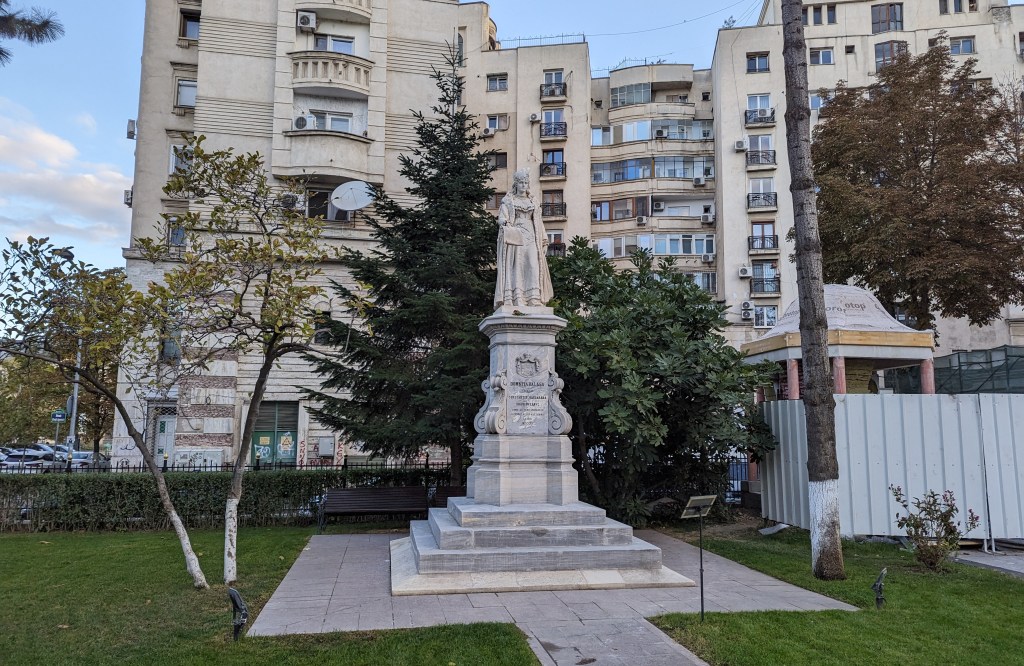
Join me on a captivating journey through history as we explore the life of one remarkable woman—Bălașa, the sixth daughter of the illustrious Constantin Brâncoveanu. Born in 1693, Bălașa grew up amidst the splendor of the court alongside her brothers and sisters. At just 16, she married Manolache Lambrino, a member of a prosperous family, but her life would soon take a dark turn.
On the fateful day when her father embarked on a trip to Constantinople, Bălașa found herself in the city, preparing for her brother’s wedding. That joyful occasion was shattered as she and her mother were imprisoned in the notorious Ceauș Emini women’s prison, where they endured brutal torture in an attempt to extract the location of Brâncoveanu’s hidden fortune.
Following the execution of her father and brothers, Bălașa, her mother, and her sister-in-law were forced to remain in the Ottoman Sultan’s Serai until they were ransomed for a substantial sum of money. Their path led them into exile in the Caucasus, in Kutais, and it would be 2 long years before they could return to their homeland in 1916.
You may wonder why we focus on Bălașa when Brâncoveanu fathered many daughters. The answer lies in her indomitable spirit and legacy, which is tied to the construction of a beautiful church. Together with her husband, she established a small church, a school, a nursing house, and a home for the needy, funneling her wealth into these vital institutions. After her husband’s passing, Bălașa dedicated herself to building a grander church, one that would stand as a testament to her love and devotion. Completed in 1753, just a year before her death, this church became a symbol of resilience.
Over the years, the church has undergone several transformations. The first major event occurred in 1838, when an earthquake brought it down. Between 1830 and 1842, a new church was constructed, alongside the establishment of a hospital. However, this new church faced its own challenges, particularly from flooding, as it was located near the Dâmbovița River, which periodically inundated parts of Bucharest. After enduring for 40 years, it was replaced once again.
The current church, which we see today, was built between 1881 and 1885 and is home to the grave of Lady Bălașa. Remarkably, this church survived the communist era when many others were demolished to make way for new developments. Legend has it that Nicolae Ceaușescu’s wife sought to have the church torn down during planning meetings for Bucharest’s reconstruction. Each time she placed the church model down, her husband would lift it back up, resulting in a repeated tug-of-war until she finally relented. As a result, the church still stands today, albeit somewhat obscured by nearby high-rise buildings.
Unfortunately, the same fate did not befall the hospital, which was demolished during Ceaușescu’s regime.
I hope this journey has ignited your curiosity about the beautiful places in Bucharest and inspired you to learn more about its rich history!
 cursedtraveler