Hidden beneath the streets of Bucharest lies one of Romania’s oldest royal residences—the Old Princely Court. Built more than six centuries ago, it witnessed the reign of Vlad the Impaler, Ottoman invasions, devastating fires and the birth of Bucharest itself.
Grab my hand.Today, we are going to walk through my city—Bucharest. I will take you to one of my favourite places, but before we get there, we need to travel through time. Otherwise, you wouldn’t truly understand its story. So, grab my hand and let’s begin our journey.
Our first stop lies somewhere between history and legend. We are now in the time of Bucur, the shepherd who, according to one of the oldest legends, came to this place, fell in love with it, and decided to settle here. Many believe that Bucharest takes its name from him.
Let’s stop for a moment at the little wooden church that bears his name. It stands quietly beside a much larger and more famous church, so many visitors pass by without even noticing it. Let’s go inside. Take a moment to admire its simplicity. If you wish, you can light a candle—for someone you love, for someone you miss, or perhaps for those souls who no longer have anyone left to remember them.The choice is yours.
Now grab my hand again. We’re travelling further back, to another time wrapped in legend.This time we will meet Negru Vodă, who is believed by many historians and legends to have founded Wallachia around the year 1290.Can you imagine living in those days? Would we have been ordinary villagers? Merchants?Soldiers?Or perhaps we would have been lucky enough to stand beside a ruler and witness history as it unfolded.What kind of life would you choose?
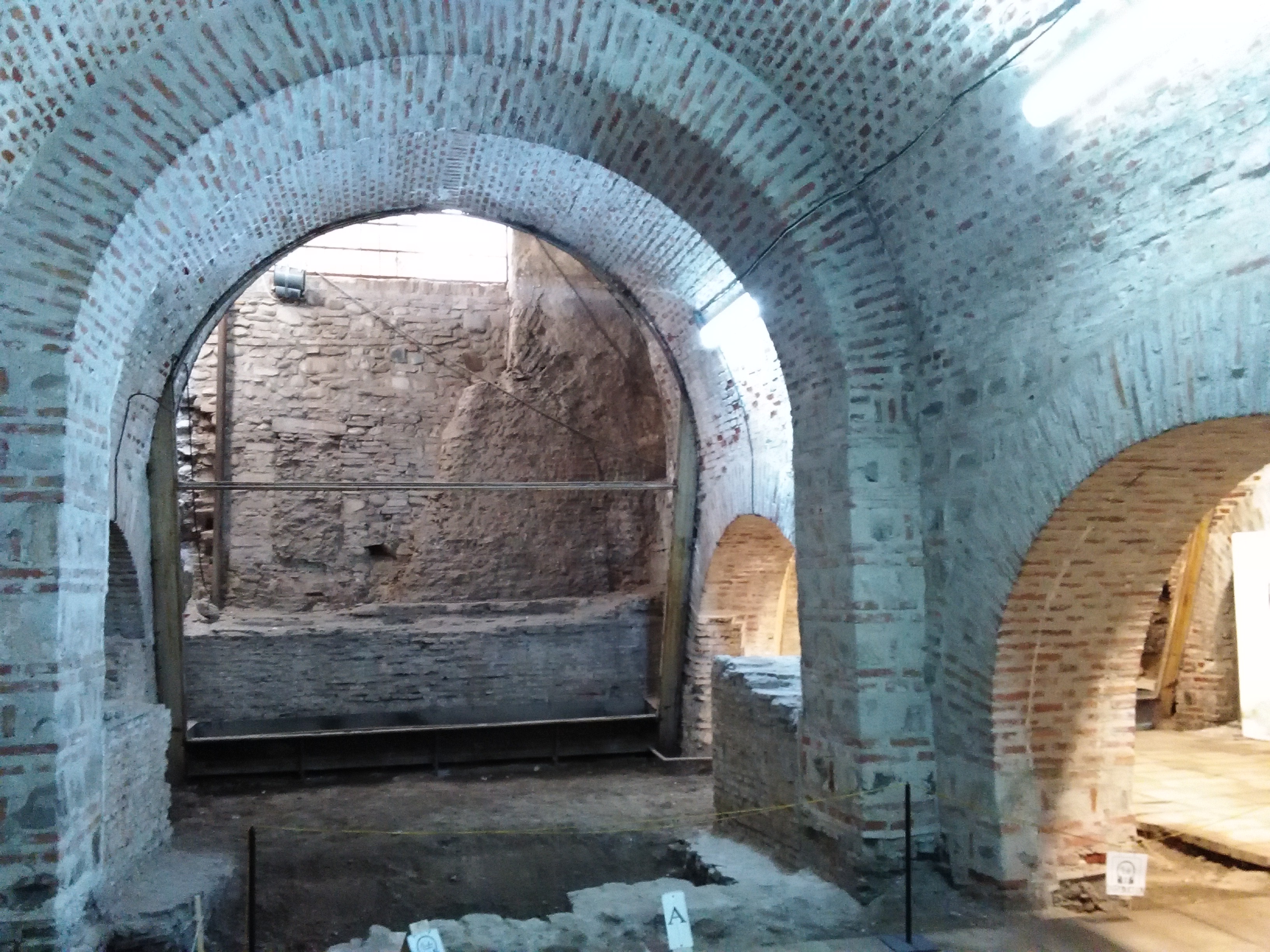
Now I will introduce you to another remarkable ruler—Mircea the Elder, who ruled Wallachia between 1386 and 1418.By now you may be wondering..”What exactly was Wallachia?”Back then, Romania did not yet exist. Wallachia, Moldavia and Transylvania were separate lands, each ruled independently. Only centuries later would they become the country we now call Romania.Mircea the Elder strengthened and expanded the princely court that we are about to explore.So let’s step inside.Look at these old bricks.Touch these ancient walls. Imagine how many generations have passed through here.How many rulers stood exactly where we are standing now.How many decisions that changed the destiny of an entire country were made between these walls.Would these have been peaceful times?Or would we suddenly hear swords clashing outside?Perhaps we’d even end up exploring the dungeons…Let’s hope not.
Speaking of history, the first written mention of Bucharest dates back to 1459, during the reign of Vlad the Impaler, in a property document.Yes…That Vlad.The one almost everyone knows today as Dracula.It is a pity he wasn’t really a vampire. We might have won all our battles against the Ottomans much more easily.Imagine walking through Bucharest during his reign.We should probably be careful not to upset him.Impalement isn’t exactly the kind of death I’d like to experience… not even in my imagination.People remember Vlad as a cruel ruler, and perhaps he was.But they were cruel times, and mercy was often seen as weakness.Still…Imagine for a moment that Bram Stoker hadn’t simply borrowed Vlad’s name.Imagine he truly had been a vampire.We could actually meet one.Maybe even become immortal ourselves.Would you like that?Would you trade sunlight, warm summer mornings and ordinary life for eternity?Would immortality be worth an endless thirst for blood?I’ll let you decide.
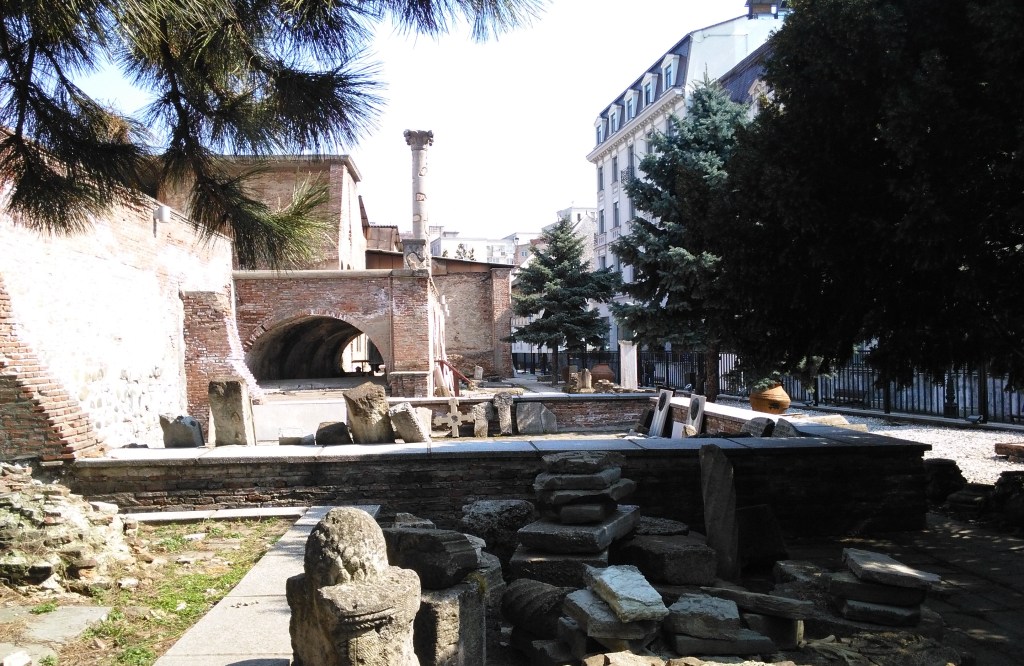
At that time, however, Bucharest was not yet the capital of Wallachia.That honour belonged to Târgoviște.For many years, Bucharest served only as the summer residence of the Wallachian rulers.Later, during the reign of Radu the Handsome, Vlad’s younger brother, Bucharest finally became the capital.The two brothers could not have been more different.Both spent part of their youth at the Ottoman court, yet each chose a completely different path.History certainly has strange ways of shaping people.Now that you know a little about Bucharest’s beginnings, let’s return to the Old Court itself.These ruins have survived for more than six centuries.They have witnessed rulers come and go.Celebrations.Betrayals.Wars.Fires.Earthquakes.Every generation added something new to the palace.Every generation also left its scars.
In 1660, the Ottomans invaded and badly damaged the court.Imagine standing here while smoke filled the streets and soldiers marched through the city.I think we would both be looking for a very good place to hide.
A few decades later, during the reign of Șerban Cantacuzino, new buildings were added to the northern side of the palace.
Then, at the beginning of the eighteenth century, another great fire swept through the complex, forcing part of it to be abandoned.But history has a strange habit of rebuilding what it destroys.
During the reign of Constantin Brâncoveanu (1688–1714), the court entered one of its most elegant period .The palace became beautiful once again.Brâncoveanu was one of Wallachia’s greatest rulers, a patron of art and architecture whose influence can still be seen throughout Romania today.After him came more difficult times.
The Phanariot rulers arrived—Greek princes appointed by the Ottoman Empire.Some ruled wisely.Others cared more about filling their own pockets than improving the country.Under their rule, the Old Court slowly lost its importance.Finally, in 1775, Alexandru Ipsilanti built a new princely residence on Spirii Hill, somewhere near today’s Palace of Parliament.The Old Court was abandoned.
Soon afterwards, it was sold and divided among more than fifty different owners.Then came another tragedy.In 1847, one of the greatest fires in Bucharest’s history devastated much of the city, including the Old Court.Yet the story doesn’t end there.By the nineteenth century, new streets full of merchants had appeared around the old ruins.The area became the commercial heart of Bucharest.
One of those streets received the name Lipscani, after the merchants who travelled here from Leipzig—known at the time as Lipsca.Can you imagine walking through these lively streets?Hearing merchants bargaining in different languages.Looking for fabrics, spices, jewellery or books brought from distant lands.Do you think we would find something that catches our eye?Or perhaps we would simply get lost among the colourful shops and forget that we ever planned to leave.
Finally, let’s return to our own time.Between 1967 and 1972, the Old Court was carefully restored and transformed into the museum we can visit today.The princes may be long gone, but their stories still linger between these ancient walls.So before we leave, take one last look around.
Sometimes the oldest places don’t need to speak very loudly. They simply wait for someone curious enough to listen.I hope you enjoyed our walk through the place where Bucharest’s story began.